Appsecco

Product security testing for AI-enabled products

We test your apps, APIs, cloud infrastructure, and AI/MCP integrations — including MCP servers — then deliver a report your engineering team can act on, with evidence and fix guidance for every finding.

Scoped, non-disruptive testing for AI-enabled products — no surprises for your team.

Trusted by product teams at

Chargebee logo
Anonybit logo
infoblox logo
Atomicwork logo
appknox logo
CloudSEK logo
Mint Software Systems logo
Rippling logo
hiver logo
Accorian logo
Agoda logo
Alaan logo
Chargebee logo
Anonybit logo
infoblox logo
Atomicwork logo
appknox logo
CloudSEK logo
Mint Software Systems logo
Rippling logo
hiver logo
Accorian logo
Agoda logo
Alaan logo
Poshmark logo
mpokket logo
Spenmo logo
East West Seeds logo
e6data logo
Xendit logo
PocketFM logo
Unifyapps logo
Amnic logo
Poshmark logo
mpokket logo
Spenmo logo
East West Seeds logo
e6data logo
Xendit logo
PocketFM logo
Unifyapps logo
Amnic logo

10+

Years in product security

250+

Security engagements

500+

Critical vulnerabilities found

80%+

Clients return year over year

4.9/5

Client satisfaction

Our open-source MCP security work is used by teams worldwide — including

AI-enabled SaaS teams like Atomicwork and MCP deployments like Chargebee trust us for product security testing.

Why we built a different kind of testing practice

Over ten years and 250 engagements, we kept seeing the same pattern: the most security-conscious teams still had blind spots — not from any failure on their part, but because traditional testing was scoped too narrowly for the way modern products are actually built.

If your team has been doing security testing and still found gaps, that's not a reflection of your effort — it's a structural limitation of the model. Most testing vendors scope work around a single application or a fixed checklist. But modern products span web apps, APIs, cloud infrastructure, and increasingly AI integrations. Attackers don't respect those boundaries — they move laterally across layers, chaining small issues into real impact. Narrow scopes structurally miss that.

That pattern is what shaped our methodology. We test across your real attack surface, examine how issues chain across layers, and deliver findings with clear evidence, severity context, and fix guidance your engineering team can act on directly — without a meeting to decode them.

The insight is simple: the problem was never a lack of diligence. It was a structural mismatch between how products are built and how they were being tested.

The Process

How an engagement works

Four steps, no surprises. You'll know the scope, price, and delivery date before any work begins.

1

Discussion

We talk through your product's architecture, what you're most concerned about, and what's been tested before. 30 minutes, no commitment.

2

Scoping & fixed quote

Within 48 hours, you get a written scope, fixed price, and confirmed delivery date. No hourly billing, no ambiguity.

3

Testing

Our team tests independently — no engineering time required during the engagement. We work from a staging environment or scoped production access that you configure once, before testing begins.

4

Review & handoff

You get a detailed report with evidence, repro steps, and developer-ready fixes. Revalidation is included at no extra cost — use it whenever your team is ready, within 30 days of delivery.

No-pressure conversation
Quote in 48 hours
Fixed price, no hourly
Revalidation included free

Attack Chain Analysis

Attackers chain small issues into full paths

Real breaches rarely start with a single critical vulnerability. They start with small issues — a misconfiguration, a logic gap, an exposed endpoint — linked together. Our testing methodology mirrors this: we follow the same chains an attacker would, so your team sees how individual issues combine into real risk.

1

Weak configuration

A permissive CORS policy, an overly broad IAM role, or a misconfigured storage bucket. What looks harmless in isolation is the first link in a chain. We check for these because attackers always start here.

2

Authentication flaw

A gap in session handling or token validation lets an attacker bypass identity checks. Combined with the initial misconfig, it turns into stable access. We test auth flows end-to-end to find these gaps.

3

API exposure

An overlooked endpoint or under-validated API call expands the attack surface. With partial access already gained, the API becomes a pivot point. Our testers map your full API surface to find these.

4

Privilege escalation

Role or token design mistakes convert partial access into higher privileges. We test privilege boundaries specifically because this is where chains become dangerous.

5

Full path documented

Every chain we find — from initial foothold to business impact — is documented with evidence and fix guidance. Your team sees exactly what to address first.

This is why we test in chains, not checklists. Attackers don't follow a scan report — they follow logic. Our methodology exists because of how real attacks work: each engagement traces the paths an attacker would take, documents every link with evidence, and gives your team clear fix guidance.

Testing Scope

What a Product Security Test covers

One engagement covering your full product surface. Here is what is in scope.

Business logic abuse

  • Out-of-order flows, step skips, misuse of legit features
  • Multi-step chains that create real impact

What You Get

Evidence, clarity, and fix guidance — every engagement

Every engagement ends with a structured report built for engineers and leadership alike. Each finding includes documented evidence, clear prioritization by real-world impact, and specific remediation guidance — so your team knows exactly what to fix and your internal reviews have the answers they need.

Prioritized findings

Each issue is ranked by real-world impact — not just severity scores. Your team knows what to fix first and why it matters.

Evidence and reproduction steps

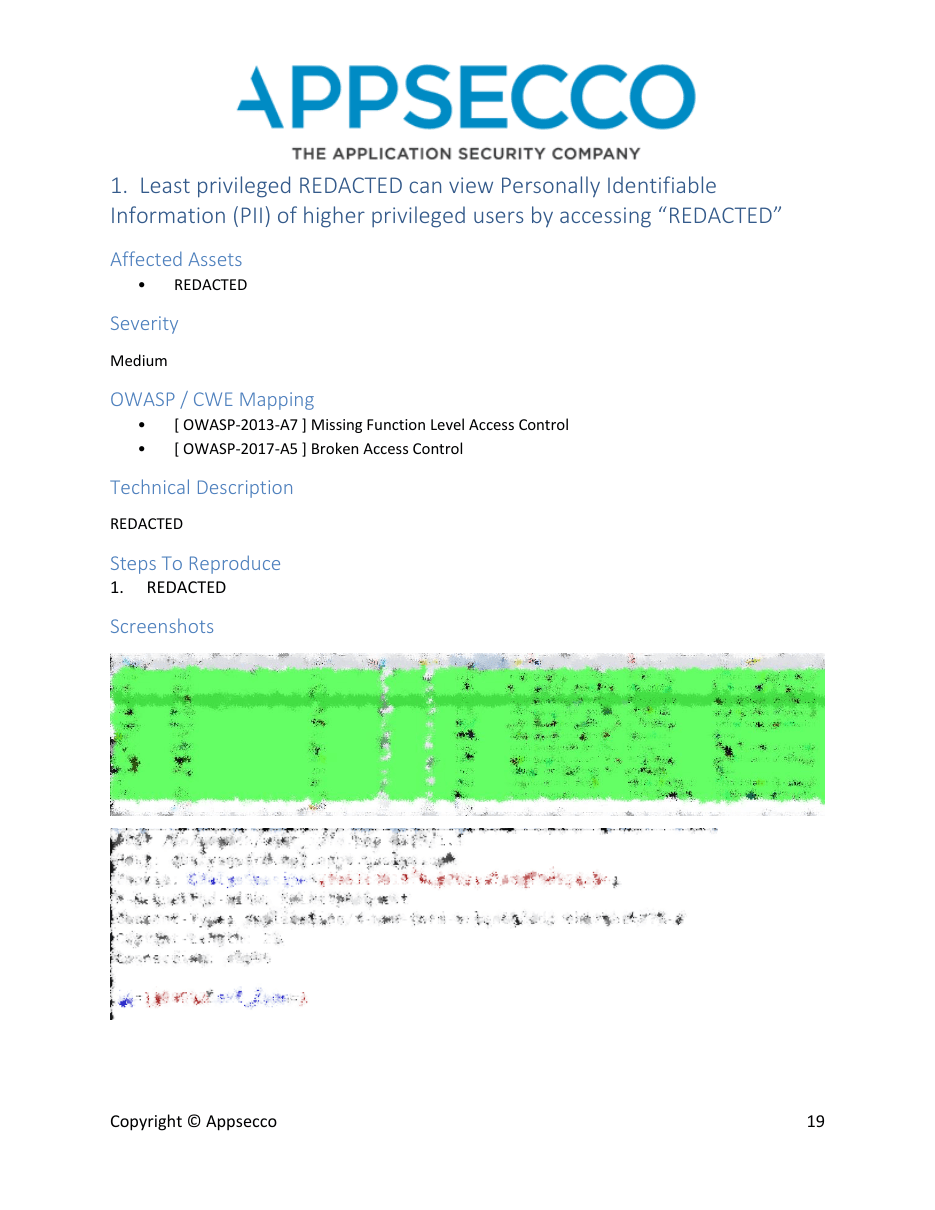
Every finding includes proof — screenshots, request/response pairs, and step-by-step reproduction. Nothing is left ambiguous.

Fix guidance for engineers

Remediation advice written for your engineering team — specific to your stack, not generic best practices copied from a template.

Executive summary

A concise overview of security posture, key risks, and recommendations — written so leadership can understand the findings without technical depth.

Retest verification

After your team applies fixes, we retest to confirm the issues are resolved. You get a clean verification report for your records.

Debrief with your team

A walkthrough session where we explain findings, answer questions, and help your team understand the full picture — not just a PDF handoff.

Pricing

Clear pricing you can explain to procurement

We price in simple slabs based on your product's size — not hours. The price is fixed and confirmed before work begins. You get a one-page proposal you can forward directly.

How pricing works

We price by product complexity, not hours. A single slab is $3,500. The number of slabs depends on your product's surface area: how many critical flows, API endpoints, cloud environments, and auth models we need to cover.

The formula is straightforward: price = slabs × $3,500. No hourly rates, no variable fees, no surprises on the invoice. The same number you see in the proposal is the number you pay.

How buying works

  1. 1 Discovery call — We review your product's scope together and confirm the slab count. No commitment required.
  2. 2 Fixed quote — You receive a one-page proposal with exact price, scope, and delivery date. Ready for procurement.
  3. 3 Testing + report — We test, deliver findings, and include revalidation at no extra cost.
Fixed price confirmed before any work begins
One-page proposal ready for procurement review
Revalidation always included in the quoted price
Custom terms for projects > $14k; annual contracts available

Pricing FAQs

What Clients Say

Clear findings, no surprises

Teams that build security products trust us to test their own systems. They value clarity in reporting and confidence in the process.

Infoblox
Appknox
Atomicwork
Accorian

Select customers shown with permission. Additional references available under NDA.

The kind of vulnerabilities they found were things we never expected — things which were not on our radar. That changed how we think about our own attack surface.

Founder & CEO

Asia's leading Threat Intel Company

Found multiple interesting exploitable vulnerabilities across our product. Clear reporting, thorough walkthroughs of each finding, and they stayed engaged until every issue was resolved.

Manager

Most popular Vulnerability Scanner (100+ countries)

We engaged with Appsecco for red teaming. Their findings were specific, well-documented, and gave our team a clear path to remediation.

Senior Expert

European Giant in FinTech

Want to speak with a past client in your industry? We can arrange a reference call under NDA.

When you are ready

A conversation to start.No commitment required.

Tell us about your product and what you are building. We will explain what we would test, answer your questions, and provide a fixed quote if you would like one.

Start a conversation

or view a sample report first

No sales pressure
Fixed pricing, no surprises
You decide the pace